
Everything You Need to Know About Dental Implants at MA Dental
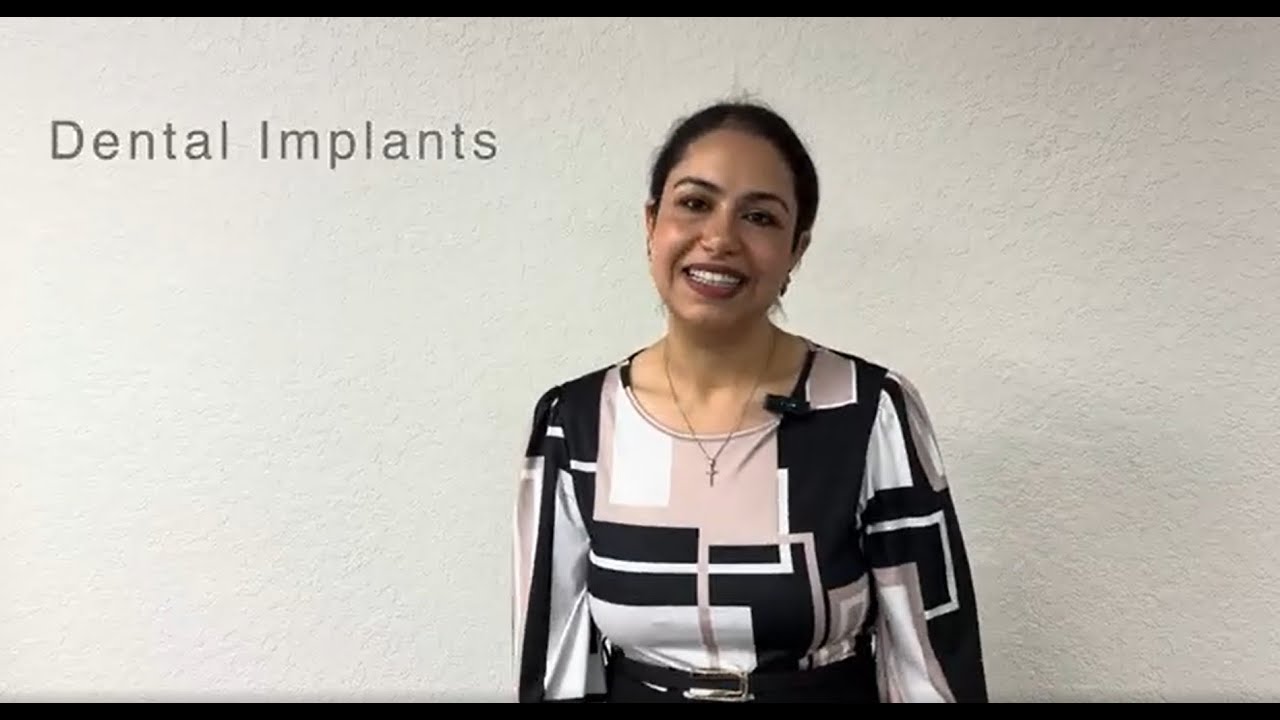
My name is Dr. Martina Assad. I am the owner and dentist of MA Dental. Today, I am here to answer some of the questions you may have about dental implants.
What are dental implants?
Dental implants, in very simple terms, can be called a post or a screw. They're usually made out of titanium or sometimes zirconia, depending on the conditions of the patient. They typically replace a missing tooth or a missing space if the conditions allow it. This can eliminate other methods of replacing a tooth, like a dental bridge or a removable dental partial. Sometimes, they can be used to lock a denture. People can get snap-on dentures, or in more advanced cases, a fixed plate or prosthesis that stays and doesn't come in and out for patients without any teeth.
In what conditions can dental implants be recommended?
We can place implants in a front area where patients lack teeth. This is a great option for a permanent solution that doesn't come in and out. On the back side of the teeth, we can also place implants to help the patient chew and function properly, replacing the need for something that comes in and out of the mouth.
Implants can also be placed for people who wear full plate dentures, in a fashion where the denture can be removed like snap-on dentures, or in a fixed fashion called a hybrid prosthesis.
What are the advantages of dental implants?
Dental implants help to restore aesthetics and function. They also prevent teeth from shifting. A common misconception is that a bridge can prevent shifting, but teeth can still shift because of a missing space. Placing a post between spaces keeps teeth from shifting horizontally or vertically. You can treat it like an actual tooth—floss, brush, and maintain it. Dental implants are the ultimate way to replace a missing space, restoring function, aesthetics, and ensuring patient health and well-functioning.
What are the steps for the process for dental implants?
The process starts with an examination, taking all recommended records like x-rays, pictures, and scans. We do everything digitally and also take a CT scan for 3D imaging of the jaw. We check the neighboring condition of the teeth and the quality of bone in the area of interest.
We then propose treatment plans, which could include extraction of a bad tooth, removal of an infection, or a bone graft. After necessary healing, we place the first part of the implant, which looks like a post or screw. After further healing, we place the middle section, called an abutment, or a temporary crown.
Finally, we take a digital image, send it to the lab to fabricate the permanent crown, and the patient comes in for their permanent crown delivery.
When is bone grafting required?
Bone grafting is required when there isn't enough bone height or width for the implant. Implants need stability and must be inside your jawbone, not grafted areas. If a tooth has been missing for a long time, the bone can erode. The implant needs bone all around it. Without sufficient bone, implants can fail.
A consultation at our office will determine the need for a bone graft, using the latest technology to provide quick evaluations.
What are the options for choosing artificial teeth?
There are three options: implants, which are fixed and do not come in and out; fixed options are preferred over removable ones for easier maintenance and management.
Removable options like partial dentures must come in and out, are often made of metal, and require cleaning. Many feel embarrassed using them in public or around loved ones.
If conditions allow, a fixed option that prevents teeth from shifting is preferred.
How long do dental implants last?
Dental implants last a very long time if done with great technique and maintained with proper hygiene and regular dental visits. They are less maintenance-intensive and are the best way to restore teeth, comparable to crowns and bridges.
Can dental implants get cavities?
No, dental implants cannot get cavities because they are made of metal or zirconia. However, they can face challenges like inflammation from bacteria or food, which is called peri-implantitis. Biting issues can also cause implants to loosen or break. Regular maintenance and dental visits are crucial to avoid these issues.
Do dental insurances cover implants?
Some patients have insurance coverage for implants, but it is not 100%. Think of dental insurance as a discount plan. Even without insurance coverage, we offer flexible financing options like Cherry or Credit and more. For coverage inquiries, call our office at (951) 467-4399, and we'll be happy to assist you.
If you live in or near Riverside, CA, and are looking for dental care, contact us at (951) 467-4399 to set an appointment. Our staff would love to talk with you!